Overview
This integration connects Spendflo with Jira Service Management, allowing approval steps in your procurement process to automatically create corresponding tickets in JSM. This routes approvals through your ITSM system while maintaining full visibility and compliance.
PrerequisitesAn Administration role is required to set up the Jira Service Management integration.
The integration is only available on Standard and Premium plans.
The integration user must have an Agent License for Jira Service Management. To enable this:
Go to Settings → User management → Users → open the user → App access → change Jira Service Management from Customer → Agent → Save
In Project Settings → Project Permissions, the integration user or their role must have the following permissions: Browse Projects, Create Issues, Delete Issues, Modify Reporter (required if the Reporter field is used for ticket creation).
If Issue Security is enabled on your project, include the integration user or their role in all security levels.
FeaturesCreate a service ticket in Jira Service Management directly from Spendflo.
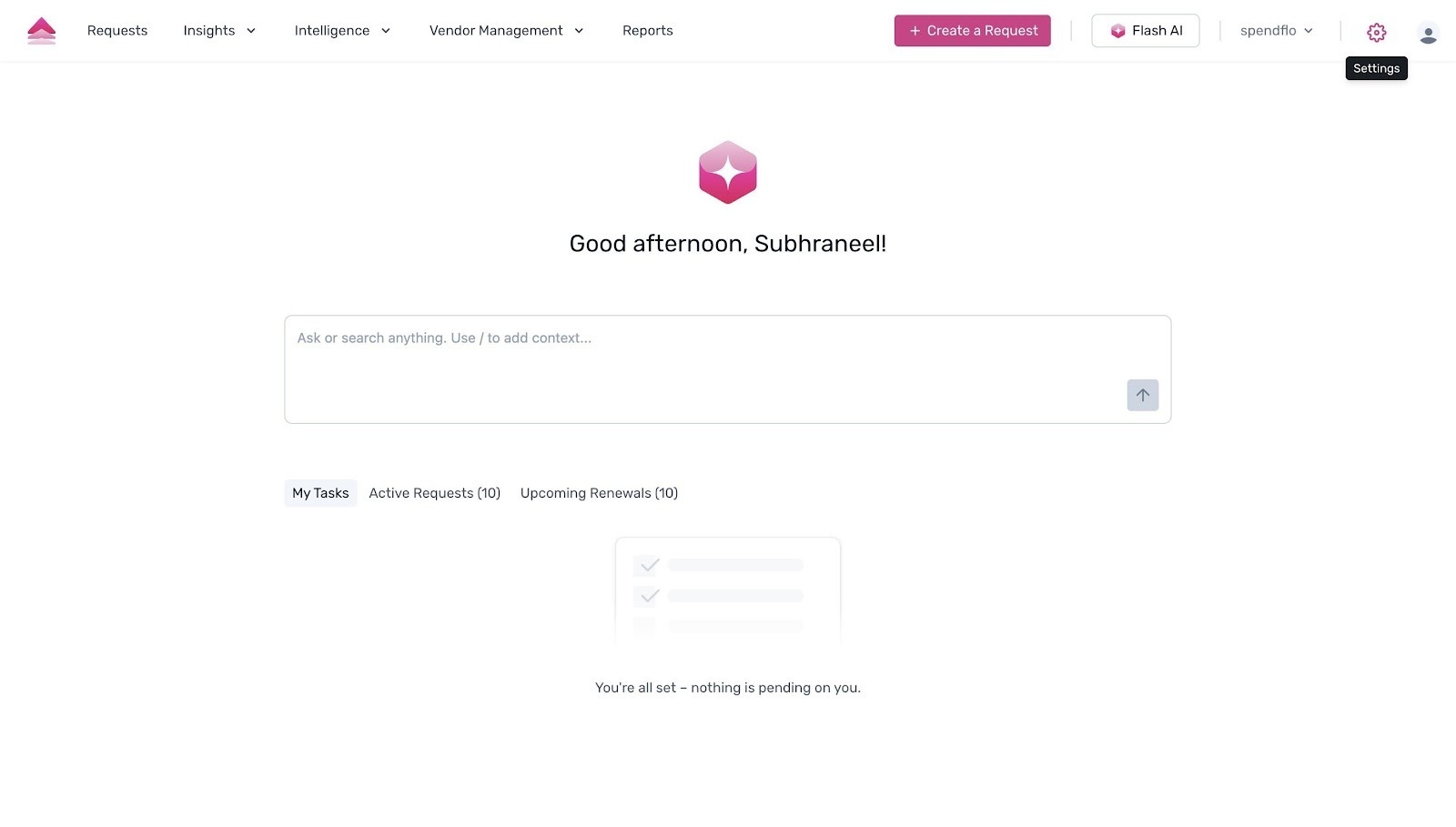
Steps to Set Up the JSM IntegrationFrom the Spendflo main dashboard, click the Settings gear icon in the top right corner of the navigation bar.
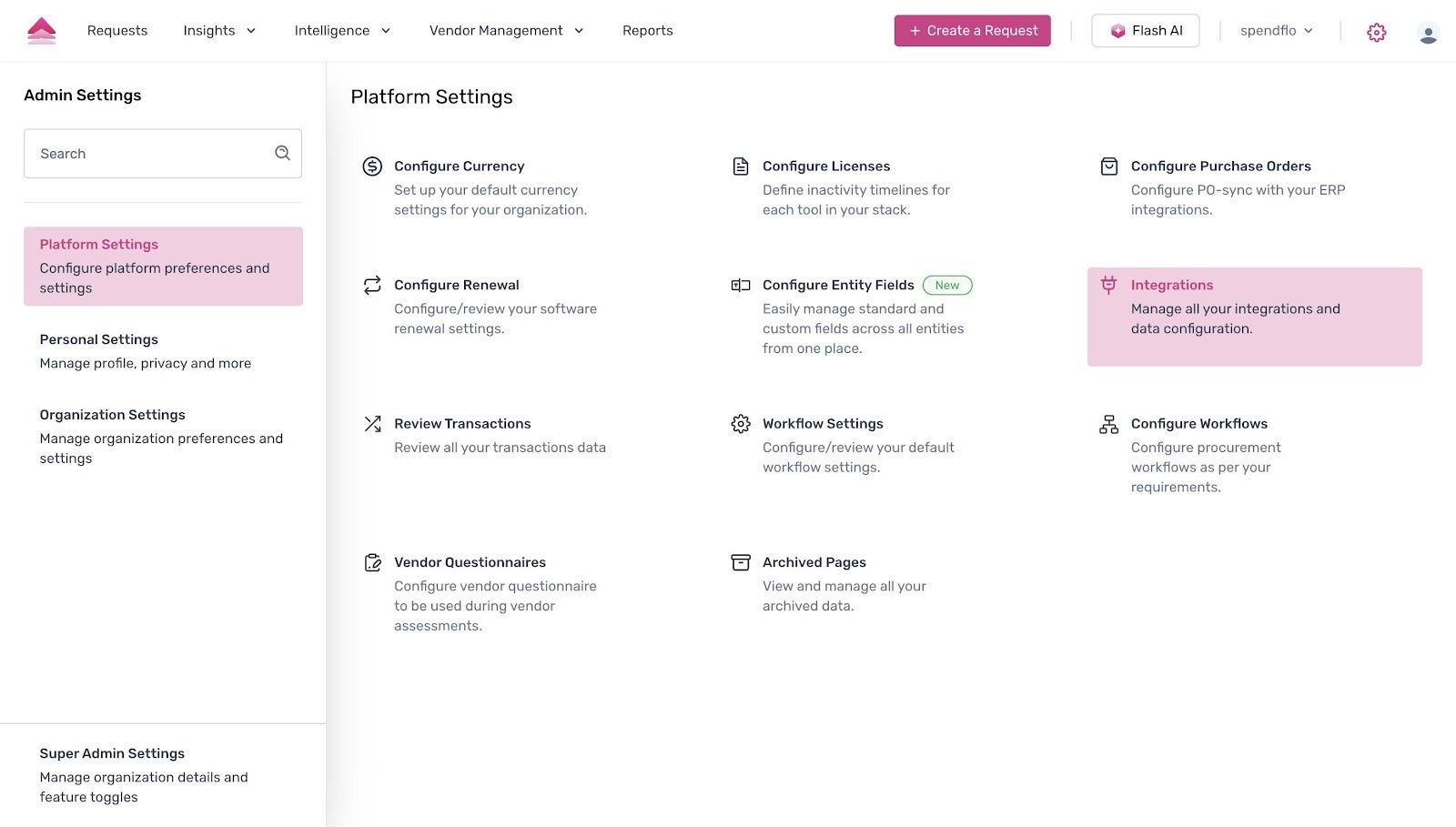
You will be directed to the Admin Settings page. Under Platform Settings, click the Integrations card.
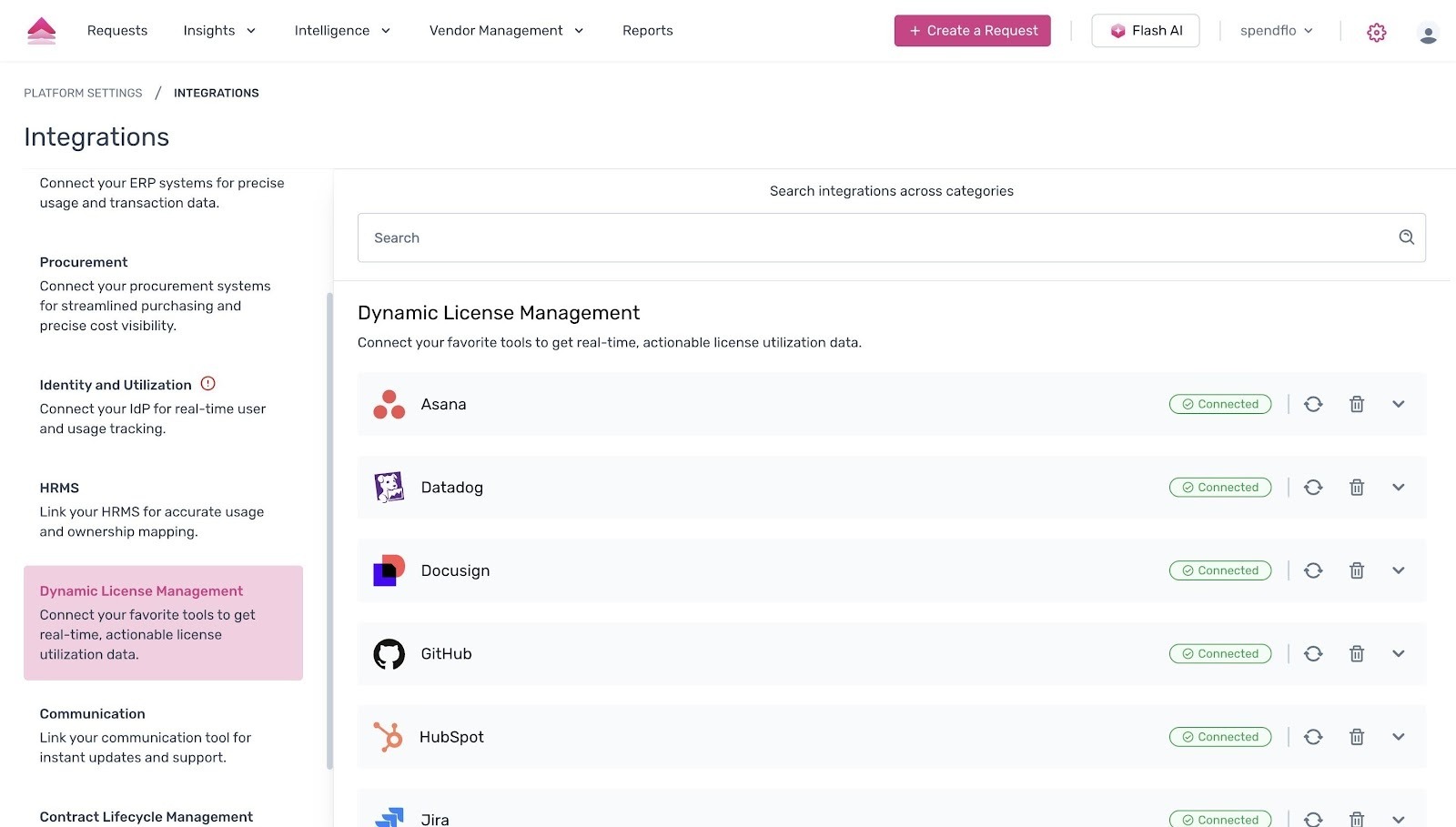
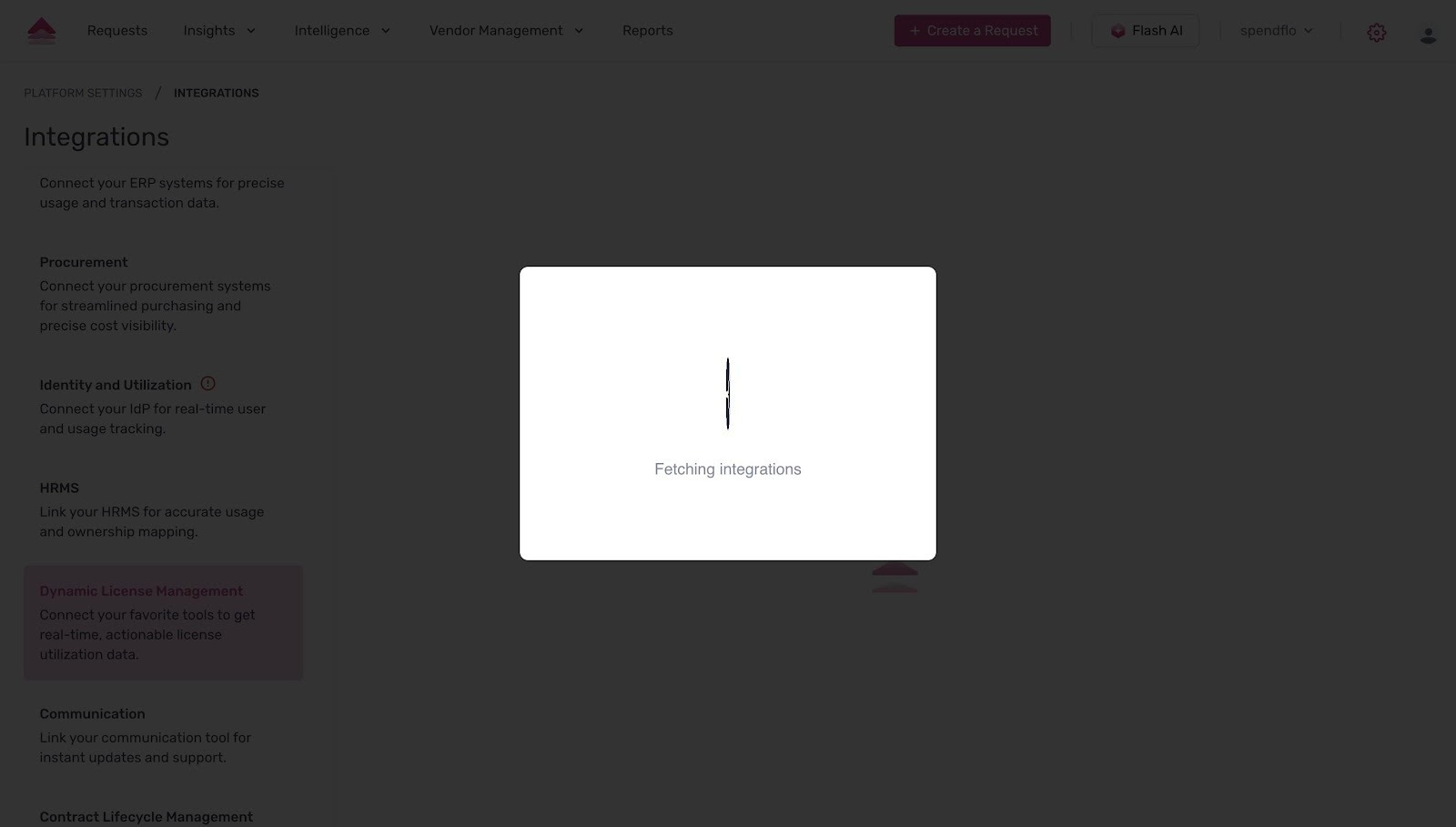
On the Integrations page, navigate to the left sidebar and select Dynamic License Management
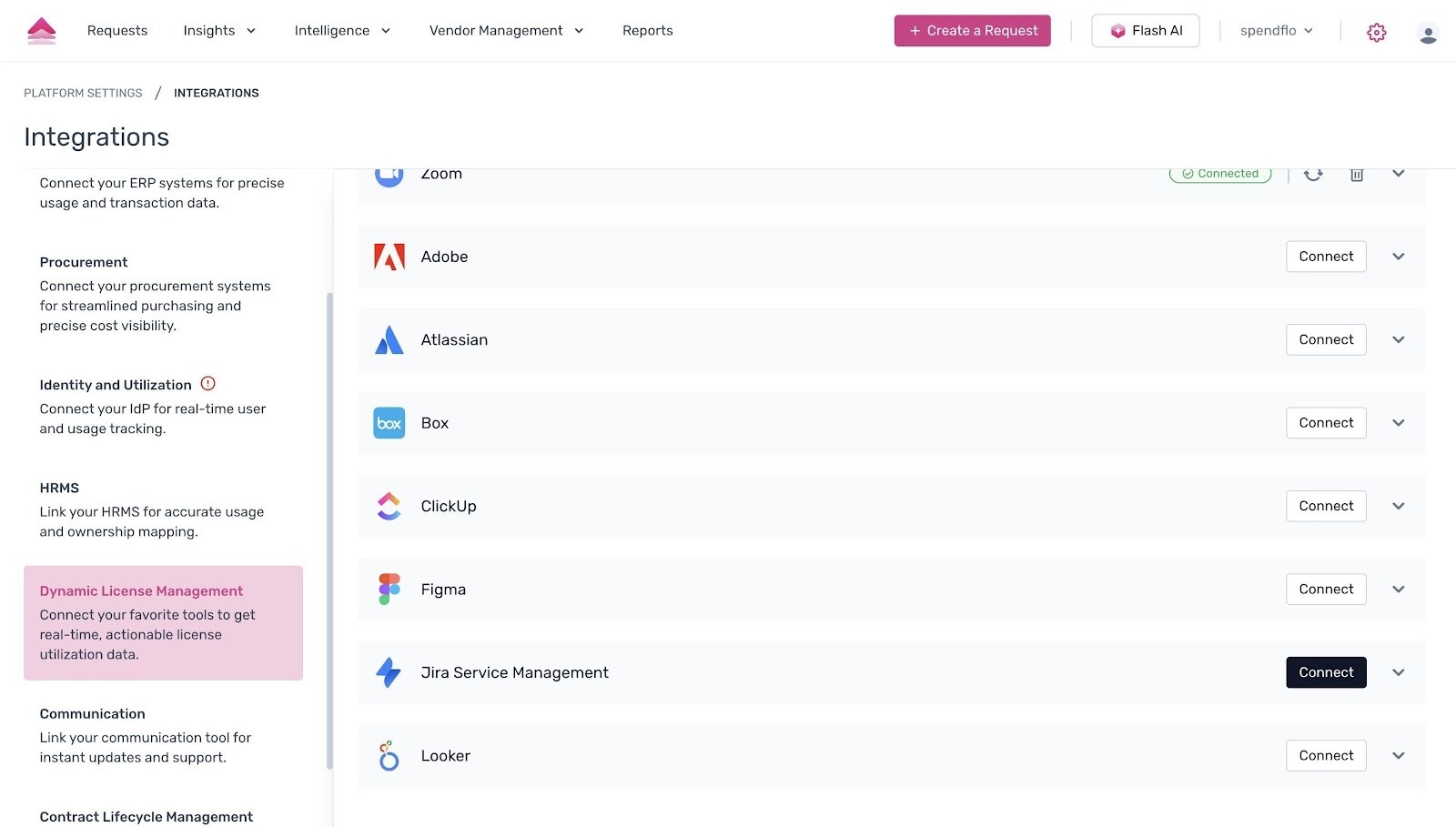
Scroll through the list of available applications to find Jira Service Management.
Click the Connect button next to Jira Service Management. A brief loading modal will appear while the system fetches the integration details.
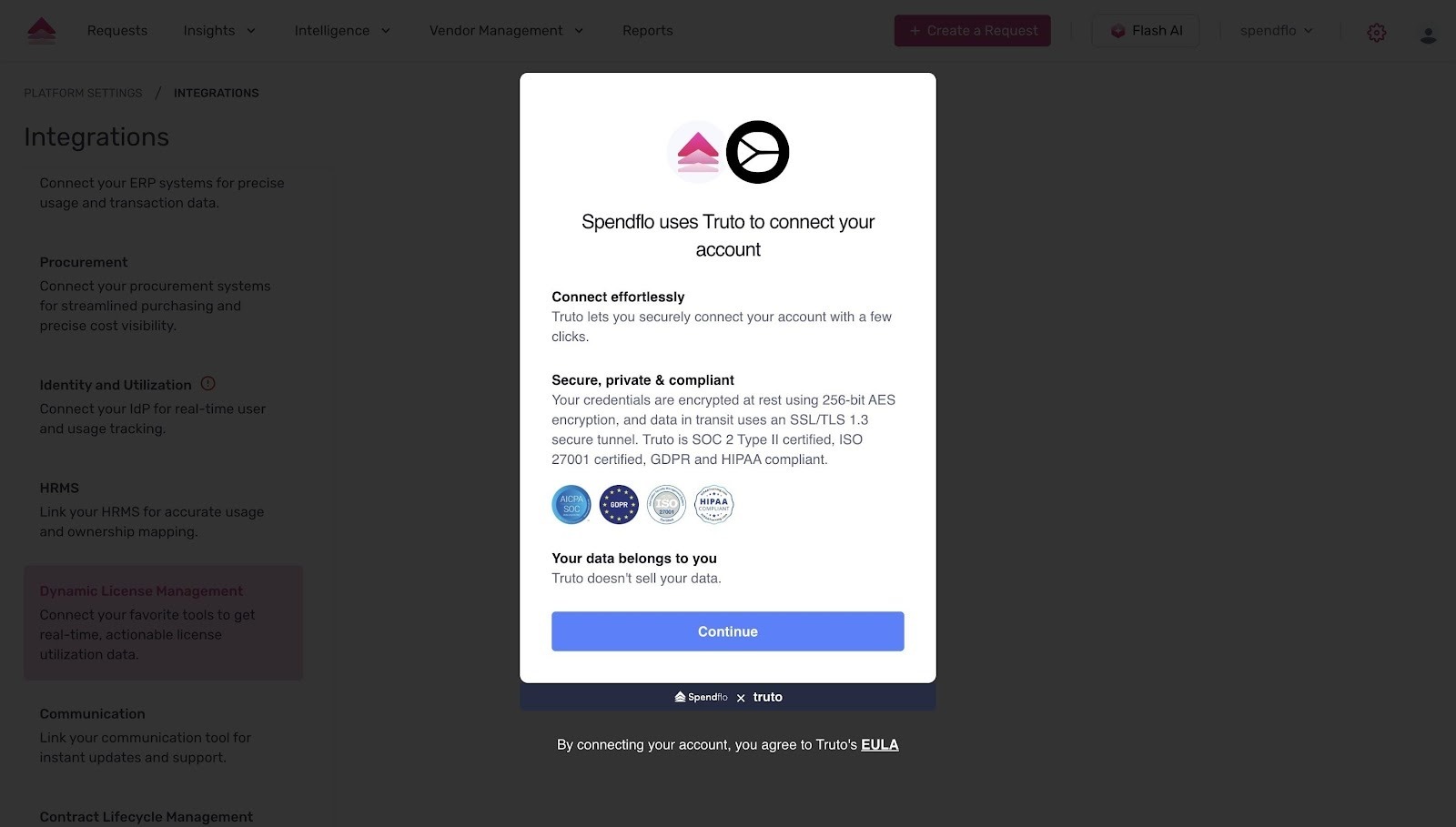
A secure connection screen powered by Truto will appear, explaining how your account will be connected. Review the security and compliance details — credentials are encrypted using 256-bit AES and data in transit uses SSL/TLS 1.3. Click Continue to proceed.
A pop-up will appear listing the permissions Truto is requesting to access your Atlassian account including Jira configuration management, user and work item access, and service desk permissions. Click Accept to grant access.
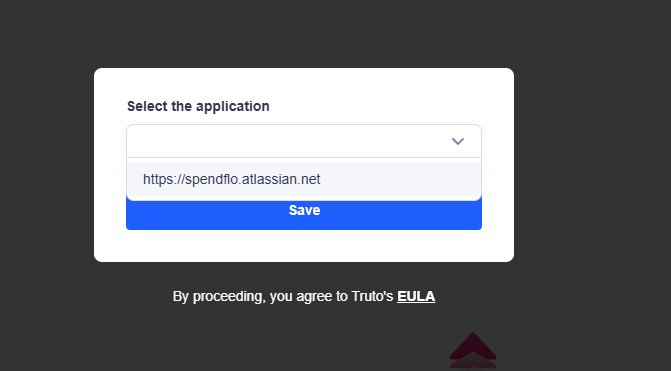
You will then see a Select the application dropdown. Choose the Atlassian instance you want to connect (for example, https://yourcompany.atlassian.net) and click Save.
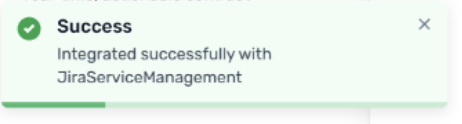
Your Jira Service Management account is now successfully connected to Spendflo. You can now start using the integration to create service tickets from your procurement workflows.
Important NotesFields marked as "hidden" in JSM will not appear in Spendflo during the mapping configuration.
The fields available on the mapping screen depend on the project's Request Type, not the Work Type.

Once the integration is set up, you can start automating your procurement workflows and managing approvals directly within JSM
Configuring the JSM Integration in a Workflow
Once your Jira Service Management account is connected, the next step is to add a JSM task to a workflow and map the fields Spendflo will write into JSM when a ticket is created.
Step 1 — Add the JSM task to a workflow
Open the workflow builder and either create a new workflow or edit an existing one.
Click the + icon at the point in the workflow where the JSM ticket should be created.
Select Add Integration.
Choose Jira Service Management as the software and Create Ticket as the action.
Step 2 — Configure the top-level fields
These four dropdowns determine where the ticket gets created in JSM and when the Spendflo task is considered complete.
Note: Spendflo will create the JSM ticket with the default status set by your organisation. You can't override the initial status from Spendflo.
Step 3 — Map Spendflo questions to JSM fields
The mapping screen shows the standard and custom fields exposed by the Request Type you selected above. Map each JSM field you want populated to a Spendflo question in your workflow form.
Standard fields
Custom fields
Any custom fields configured on the JSM Project + Request Type appear automatically on the mapping screen. Map each one to a corresponding Spendflo question.
Two things to know about which fields appear:
Fields marked as hidden in JSM will not appear on the Spendflo mapping screen.
The fields available are driven by the JSM Request Type, not the Work Type. If you don't see a field you expect, check the Request Type configuration in JSM.
Step 4 — What syncs back from JSM to Spendflo
Once the ticket is created, Spendflo automatically pulls the following back from JSM and displays them on the workflow task card:
Click Sync on the task card any time to fetch the latest status from JSM. The Spendflo task will move to Completed or Denied automatically once the ticket reaches one of the statuses you configured in Step 2.
Step 5 — Test before publishing
Open the Test Integration tab on the JSM task.
Enter sample values for each mapped Spendflo question.
A success message confirms the mapping is valid and the workflow is ready to publish.
If the test fails, check that:
All mandatory JSM fields are mapped to a Spendflo question.
The Spendflo question types match the JSM field types (for example, a date question for a date field).
The integration user still has Agent access and the project permissions listed in the Prerequisites.
Once the test passes, publish the workflow. New requests using this workflow will automatically create JSM tickets at the configured step, sync status back into Spendflo, and complete or deny the workflow task based on the JSM ticket outcome. . For more information, refer to the workflow automation guides in the Help Centre.
Was this article helpful?
That’s Great!
Thank you for your feedback
Sorry! We couldn't be helpful
Thank you for your feedback
Feedback sent
We appreciate your effort and will try to fix the article